

I’ve wanted to write about the longevity industrial complex for a while but never can face the task. A few weeks ago, Michael Easter asked me to write a paragraph for a post he was writing longevity medicine. His post came out great, and writing the paragraph gave me the activation energy I needed. This turned into a bit of a rant, but it sure felt good.
I should ignore the longevity gurus. I should tell myself:
There have always been snake oil salesmen, and this new well-dressed, photogenic, muscled internet type deserves no more attention than the bearded man selling wares from a covered wagon. Sure, they’ve gone from potions and salves to supplements, AI chatbots, and MRIs, but really, they are no different. They will make money off a few people, but they are unimportant.
As much as I try, though, they really get under my skin. In an effort to eradicate these modern chiggers, 5 reasons I can’t stand the longevity gurus.1
1. They are wrong
The longevity gurus have nothing to offer. They pitch early detection, but our most successful and widely adopted early detection strategies, breast cancer and colon cancer screening, have never been shown to improve overall mortality. Our most successful cancer screening, cervical cancer screening, will soon be unnecessary because of hard-won breakthroughs in prevention (the HPV vaccine). New technologies have either failed (cell-free DNA) or are untested and likely to fail (whole-body MRI).
The treatments they foresee remain hypotheses, conjectures, or fairy tales. Whether it is metformin, rapamycin, GLP-1s, nicotinamide, or some made-up adaptogen, we have found no substance that makes an average healthy human live longer. If you haven’t read it yet, the TLDR for Ending Medical Reversal2 might be:
A good story, an animal model, a mention in ancient scripture or indigenous mythology, observational data, or even private equity funding does not tell you that something will work. The only thing that tells you something will work is a well-designed clinical trial.
2. They are inexperienced
Wait, that’s not right; they are woefully inexperienced. I know that the gurus often argue that their outsider status is exactly what enables them to be disrupters (see #3, below). But really, only a tech bro, or residency dropout, or doctor with a practice of 100 healthy, wealthy, and privileged patients can possibly think that a non-specific longevity tonic is possible.
What do I see in my patients in their 9th or 10th decade? I see people who have lived well and taken care of themselves, who are failing. When we fix something, we are mostly preventing further decline rather than restoring them to good health. And, each fix usually comes with a complication or another diagnosis. The idea of a single fix is laughable.
3. They are overconfident
I love disruption. I am happy that Uber disrupted the taxi industry. I am happy that Airbnb has given us more options when we travel. I love FedEx. But most disruption falls short. How many of us utilize the Wi-Fi capabilities of our refrigerators?
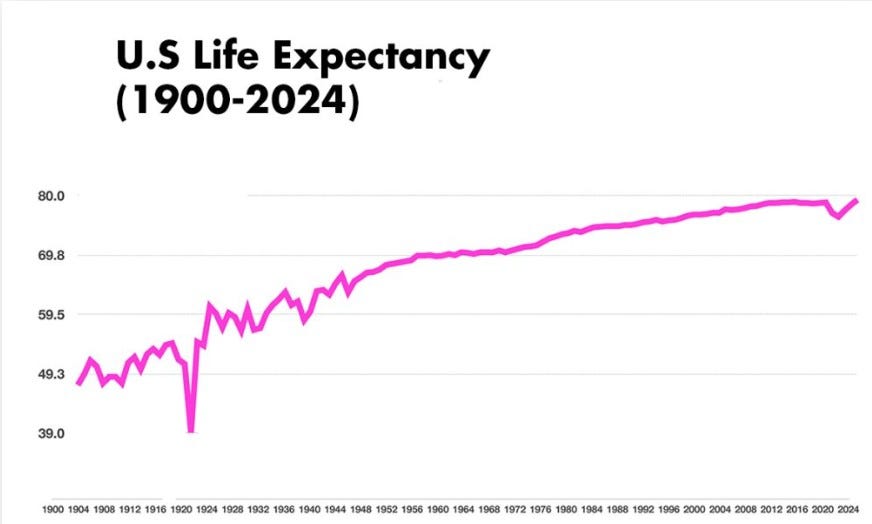
The history of people searching for the fountain of youth should make us all just smile and walk on by when we hear people pitching longevity. The actual work to improve longevity is long and hard. The true longevity gurus are not those with pretty websites with a “buy now” button but the people who have developed the science and deployment of interventions to prevent and effectively treat diseases that once caused premature death; premature deaths which occurred from infancy through the 70s. The strides these people have made are amazing, and I am optimistic that the trajectory here might continue to improve in the coming years.
If I am honest, I get a little insulted by these people. It is kind of like how I can criticize the US, but if a foreigner does, I get all defensive. I spend a lot of time on Sensible Medicine criticizing medicine, but when someone outside the field tells us that he has discovered the fountain of youth, which medicine has failed to discover, well, then…
4. They are childish
It is completely normal for children to fear death. Most kids experience a period between about five and eight years old when they worry a little, or a whole lot, about death. I remember lying in bed pondering — actually getting completely freaked by — the idea of no longer existing.
But, you know what happens to most people? They grow up. They realize that we all die. They realize that part of the wonder of our time on this planet is its transience. It is naïve to believe that we can meaningfully alter our biology.
5. They are selfish
The state of the planet should be telling us that we need fewer people, not more. Sure, there are many complicated solutions to the world’s problems, but a simple one would be for fewer of us. I want to stick around for as long as possible, but I also would like to leave a magical, livable world to my children. We, and our predecessors, clearly have not thought enough about this.
Conclusion
Medicine has done amazing things and I expect we will continue to make slow steady progress at making peoples lives longer and better. So, maybe this is too harsh. Maybe today’s longevity gurus are not uninformed, inexperienced, overconfident, selfish children. Maybe they are just avaricious charlatans. Part of me hopes this is the case. It is true that their sales pitch is often good, starting with common-sense advice (eat well, get a good night’s sleep, exercise, have friends) and using terms like wellness and healthspan as an entrée to their kookier and more expensive ideas.
But even as a proud capitalist, I have trouble embracing their profit-driven approach because their products can cause real harm. Yes, “a fool and his money are soon parted,” but the longevity gurus give people false hope, and their screening advice drives healthy people into the public system through false positives and overdiagnosis, thus driving up costs for those not tempted by their falsehoods. At the hand of the longevity gurus, a fool risks even the wisest of us being parted from our money.
OK. I feel better. Next week, I will tell you why you won’t have a carbon-neutral flying car in 5 years.
I had just finished writing this essay when I got the July 6/13 issue of the New Yorker
and read this wonderful article: Something Is Very Wrong with Modern Longevity Science. The author, Dhruv Khullar, points out flaws in much of the observational and animal data that support the favorite recommendations of longevity gurus. He takes appropriate aim at the Blue Zone ridiculousness and does a nice job of extending the lessons to current fads. He writes:
One hardly needs a list of blue zones to think of commonsense ways to improve life span. We can invest in biomedical research and enact laws and regulations to reduce pollution, design walkable neighborhoods, establish safe public spaces, create affordable housing, and curb smoking. Such strategies might not trend on TikTok, but they would be more effective than the latest juice cleanse. Unfortunately, the pursuit of longevity—like so much else in American life—is increasingly an individualistic endeavor. We adopt new health fads as though they are forms of personal expression, experimenting with cold plunges and red-light therapy, wearable devices and peptide injections. Though it’s nice to think that striving to be healthy is cool or popular—it wasn’t always—the quest for extending life can become monomaniacal, and we easily forget that one’s life span is not, by and large, a life-style choice. Instead, longevity has always been a communal affair.
The article is a good read, and a bit less rant-y than mine.
Because I am a bit of a wimp and don’t want to end up on a manosphere podcast debating with one of them, I will use no names today. For those who follow them, you’ll probably have a sense of a few of the ones I’ve been reading.
Bottoms up!
I agree with much of Adam’s criticism of the longevity industry, particularly the tendency to overpromise and commercialize ideas long before the evidence is ready.
Where I would differ is on the broader scientific goal. As an oncologist, I’ve seen both sides of early detection. I’ve seen the anxiety, false positives, incidental findings, and overdiagnosis. I’ve also seen the patient whose cancer was found early enough to be cured rather than treated palliatively. Those experiences make me cautious, but they also make me optimistic that we can do better.
I think the answer isn’t to abandon longevity or early detection. It’s to pursue them thoughtfully, with rigorous science. We need biomarkers that distinguish aggressive disease from indolent disease, trials that demonstrate meaningful clinical benefit rather than simply finding more abnormalities, and the humility to discard ideas that don’t work.
There is a version of longevity medicine that is driven by marketing, and there is another driven by careful science. I have little interest in the first. I think the second has the potential to meaningfully reduce suffering and save lives.
80% right on, but you swung and missed on point #5. Malthus was wrong. Your grandchildren, maybe your children may live in a world of declining human population, and from what I read and hear from the economists, it will be a time of less wealth and less well-being for humans and the planet.