

Dr John Mandrola is once again galavanting around Europe. He is probably on a bicycle right now talking about how great the Danish system is.
This leaves me with the hard work of completing his column. Those are big, clip-in shoes to fill, and I will undoubtedly do a worse job.
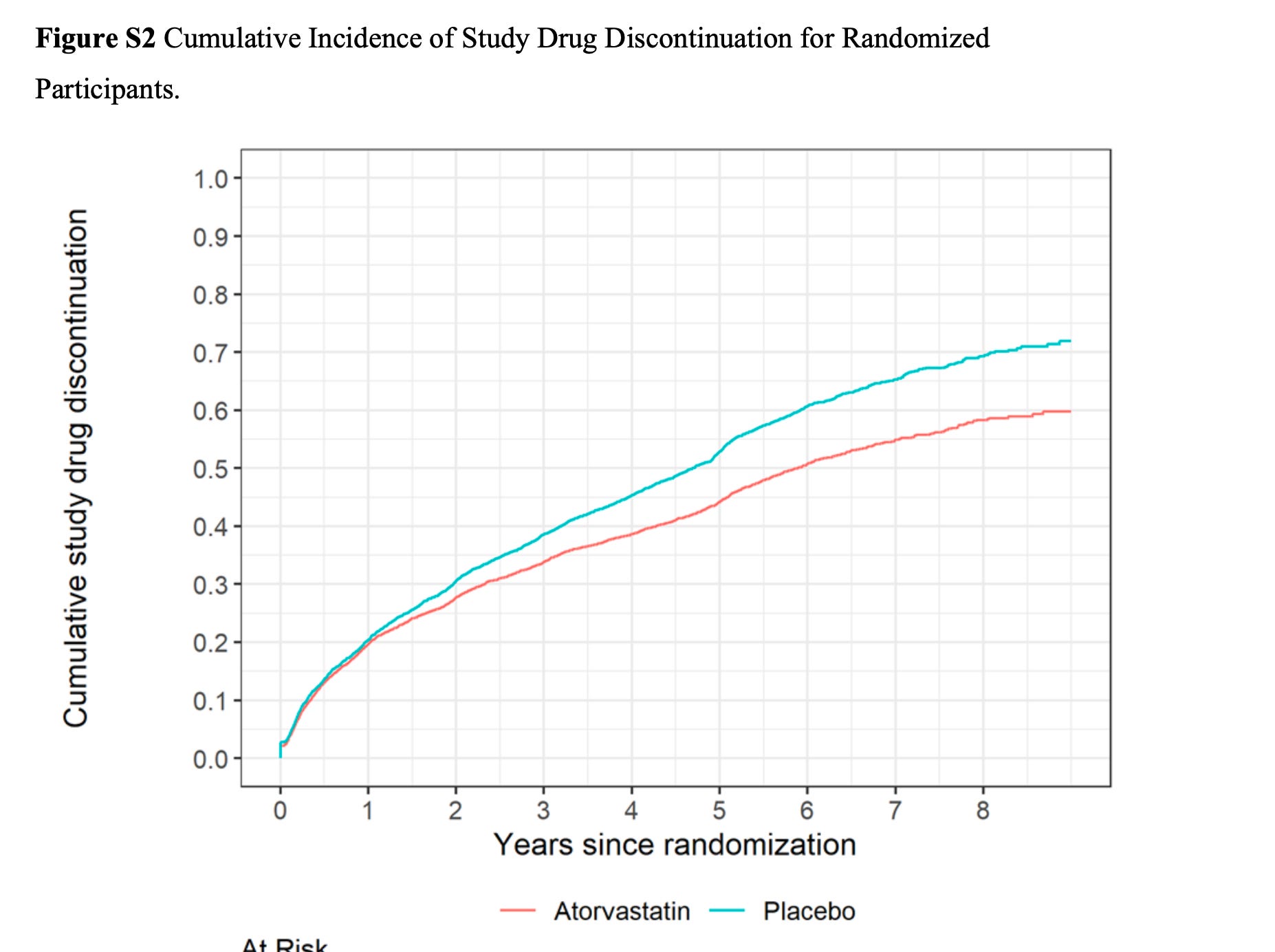
Today’s study of the week is the STAREE trial— a 9000 person RCT allocating folks over 70 to Atorvastatin vs. placebo, and appearing in this weeks NEJM. It is part of a series of recent trials on this topic. This one took community dwelling adults with no history of vascular disease or dementia and mean LDL of 127, and after a 14 day placebo run in period to test compliance (PS: I hate this design feature— just makes in-articulable inclusion criteria and poor generalizability), randomized them to Atorvastatin or placebo. After 1 year, 20% quit taking the statin, after 6 years, 50% quit.
Elsewhere I discussed a much smaller French study with about a tenth as many participants.

That study failed to find an improvement in all cause mortality, though it had improvements in nonfatal MI. This study shows a very similar pattern. Fewer non fatal MIs and strokes with statin therapy.
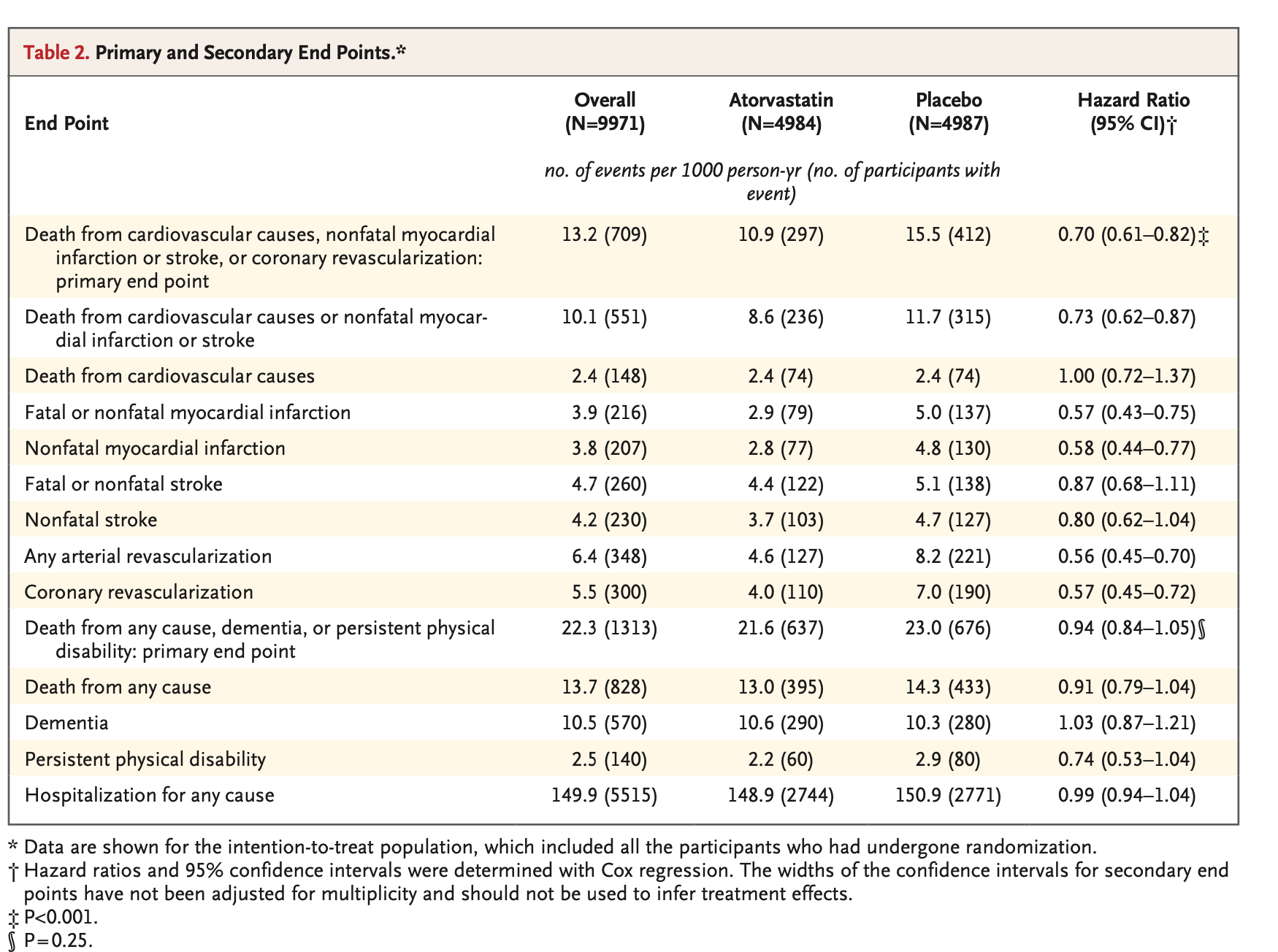
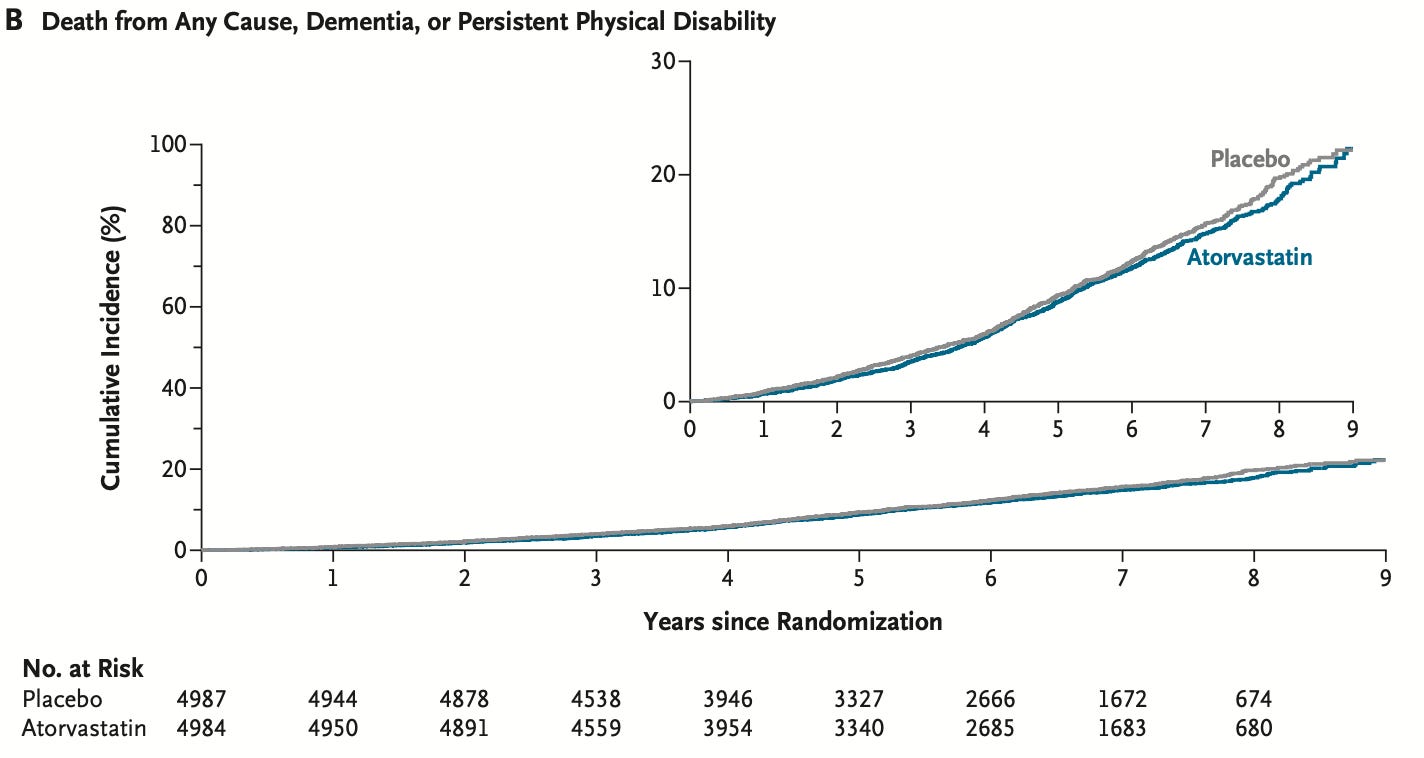
Co-Primary endpoint of disability free survival - null
Some online claim the study provides a reassuring note about dementia— it is pretty uninformative actually.

The confidence interval is a mile wide— a 3% or 5% increase in dementia would be horrific, and the study can’t exclude even a 20% increase. A 13% decrease would be amazing fwiw. That’s like half a shingles shot ;).
What is the take away?
Even among people who enroll on this study, pass a 2 week placebo run in period, half throw in the towel by 5 years. If you were assigned to Atorva, you had less nonfatal heart attacks, less revascularization, less non fatal stroke.— I believe these are real findings and not spurious for the simple reason they are realized in…. well basically, every single statin trial ever. You also don’t live longer.
My takeaway is the following
Please stop running trials like this. Make Atorva over the counter, and let people do whatever they want. Taking it won’t increase or decrease mortality. It might avert some non-fatal events and stents, but probably won’t change your lifespan. Some might think that is worth it, others might not. Even those who enroll in a study throw in the towel quite a bit by 2 and 6 years. Real world adherence will be worse.
What about dementia?
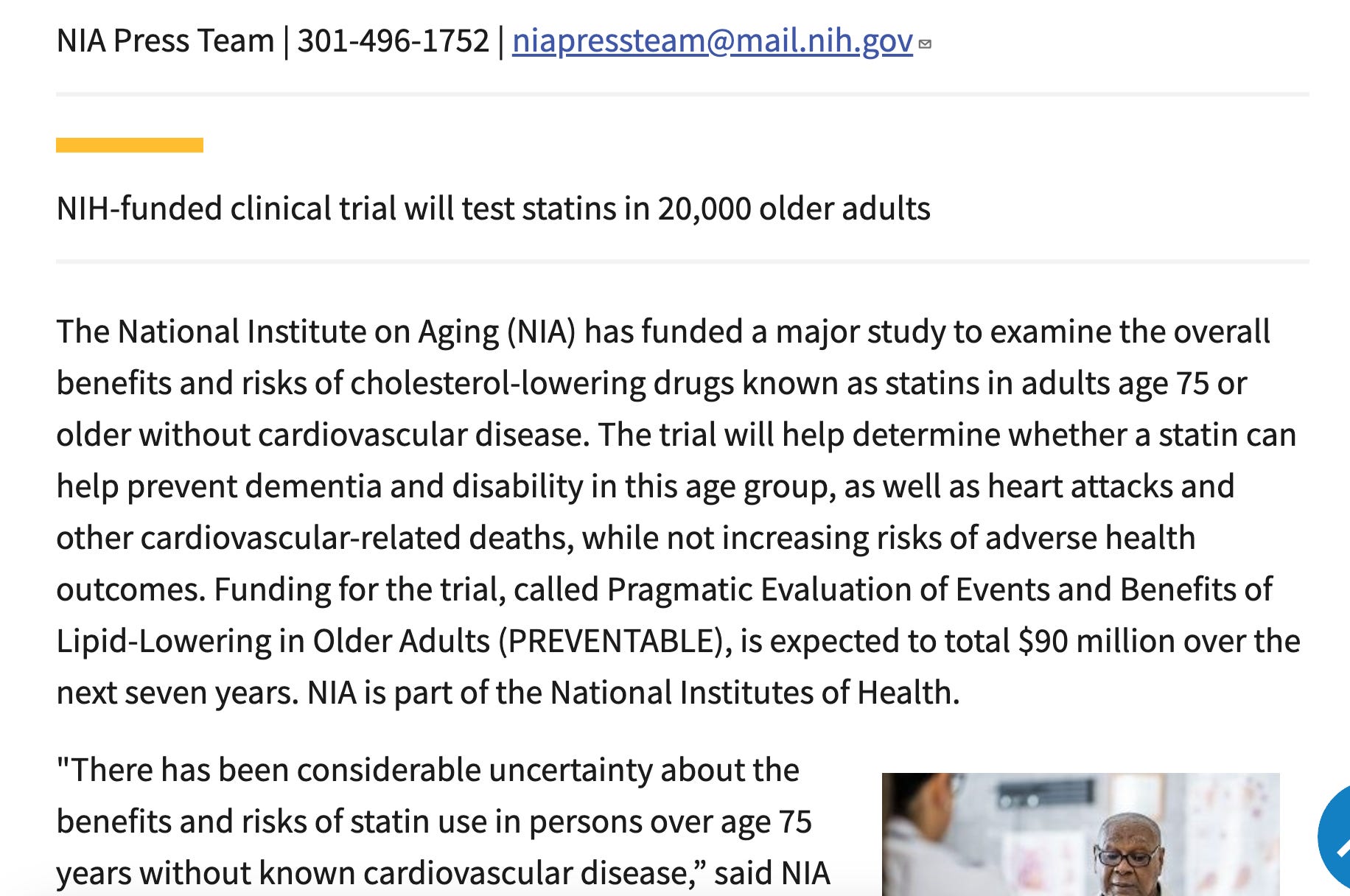
In order to get a clean dementia read out, we will need a mega sample size. The ongoing study PREVENTABLE is not big enough. I suspect it’s CI will also be too wide to be helpful.
If you need a million person randomized trial to learn more about a topic, haven’t you already answered your question?
I personally don’t cook with nonstick pans— I use cast iron, or metal. You might do the same, or the opposite. I tend to believe cast iron is healthier, even though the pan is much heavier. You might not like the weight or the fact it retains heat. You might believe the opposite— non stick is healthier.
Should we take taxpayer money to figure out who is right?
What if we ran a 500 person trial for 4 years— well that isn’t big enough, you might say to capture the wrist injuries with cast iron.
What if we ran a 9000 person trial over 8 years— still not big enough to see the reduced cancer risk of cast iron— I cry.
What if we ran a 20,000 person trial over a decade? What about a million people, ten million? When does a question become less of a research priority and more of a personal preference?
What if we found out that no matter the difference, you aren’t going to buy cast iron, and I might not feel reassured to use nonstick.
I think we forget that researchers running studies love to talk about how important the question is, but they are biased by one thing. Handing them 100,000,000 dollars keeps them employed for a decade. They have research assistants, nice offices, skip clinical time, all working on the non-stick vs cast iron project.
Another statins trial for the elderly with 20,000 person sample size. Let me predict the results— a reduction in nonfatal mi, stroke, ambiguous all cause mortality, ambiguous dementia. Aka no new information.
If we want to use taxpayer money to fund a jobs program, why not go back to National Parks. Build more trails. More lodges and cabins. Go back to FDR and the works progress administration. We probably will do more to improve the health of 70 year olds— by making it easier to hike and experience nature— than another statins trial.
“Oh, wait, Prasad makes an interesting point, lets randomize a billion dollars to statins trials or building more trails….,” a researcher still trying to get out of clinic.
For those interested. Yes, I know statins “won” on nonfatal MI despite not 100% attrition. Now we need someone to get a grant to study “if only everyone took the statin for the full time….”
My husband has dementia and his primary threatening us. He told us if husband didn’t take the statin that he would stop treating for dementia. We said sure doc no problem. Got the script and threw it in the trash.
He then wanted hubby on a twice a month cholesterol shot 😳 We told him we had no problems with the pills, but no to shot because I could not take hubs to his office twice a month.
Hubs is bed bound now and I am certain statin could not help Corticalbasal syndrome. But, doc thought would. And he threatened us while we were vulnerable. I’ll never forget it. I’ll never see him myself.
I’m sick of the medical community. Except for hospice. Hospice don’t play!
So agree with this article especially the recommendation for taking that taxpayer money to fund the National Park service! Getting people outdoors, close to nature, exercising throughout the lifetime would certainly seem to be a great way to lower chronic disease risk and hopefully happiness as well.