

Just a few weeks ago, the media was breathlessly discussing Hantavirus. I received text messages asking if it could be airborne at work. The panic was widespread.
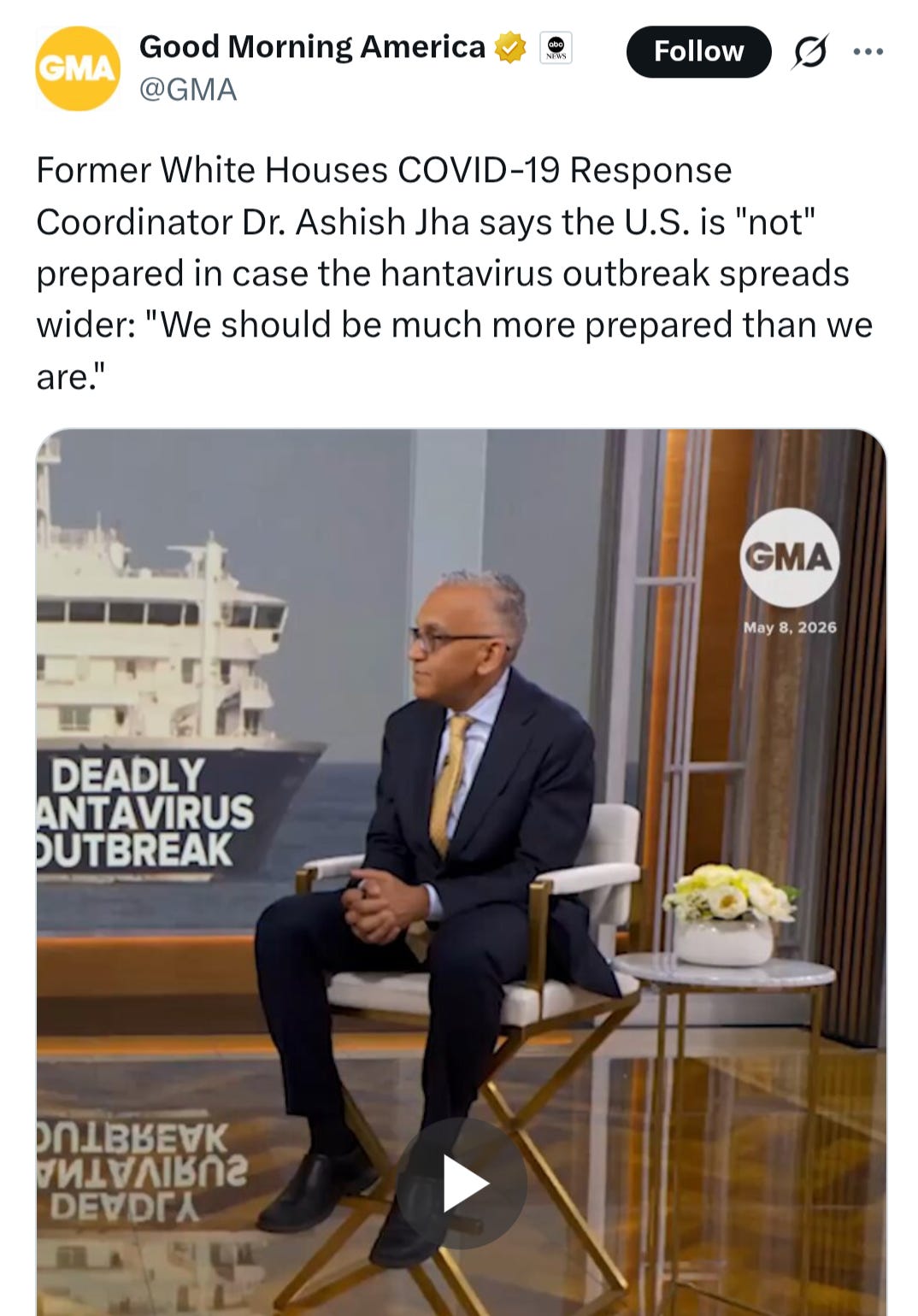
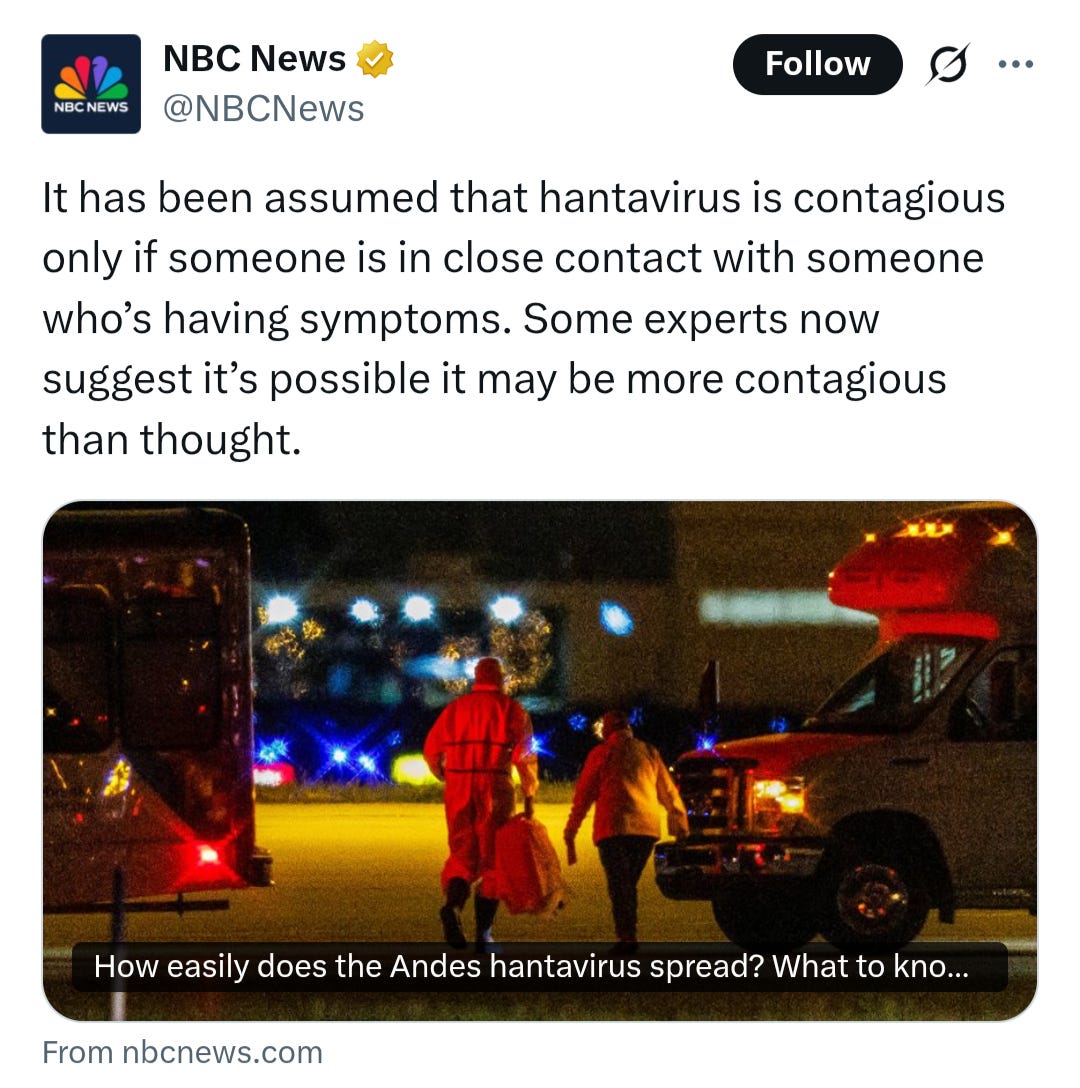
Yet on Sensible Medicine, we said plainly. Hantavirus was nothing to waste time thinking about. It would not be a pandemic. End of story.
Hantavirus, What You Need to Know

Public health messaging around the hantavirus cruise ship outbreak has been, ‘there is an extremely low risk to the general public,’ but this is suboptimal. Instead, messaging should be, ‘there is no chance this will become a pandemic. You have no risk
Now the verdict is in: Sensible medicine - 1; media - 0
The media has quietly stopped talking about the topic. This is the main stream media playbook. Present a misleading story— and then never follow up your error.
Imagine saying this:

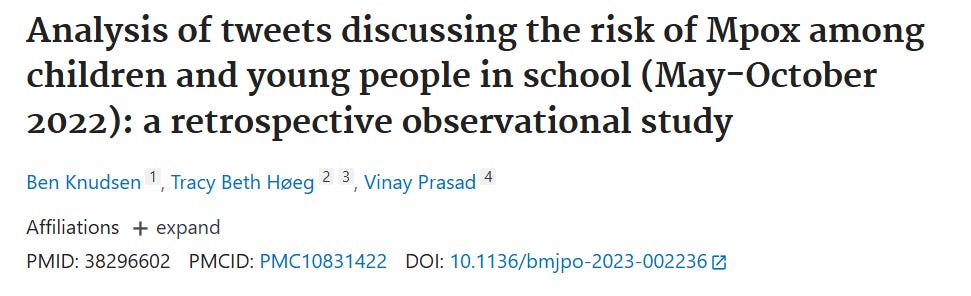
Aside: Why is that name familiar?
We did follow up on this topic:
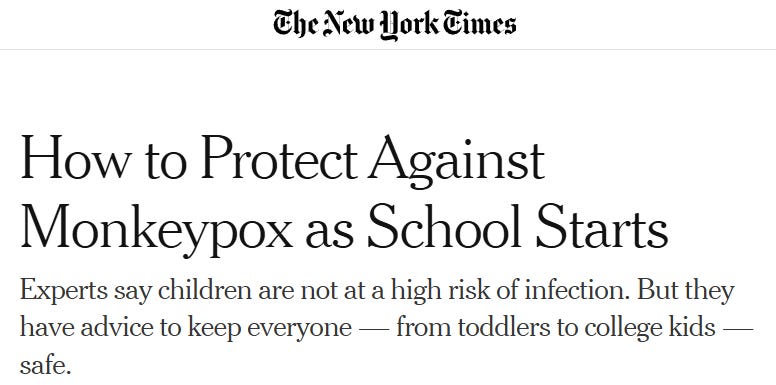
The list goes on and on. School closure was horrific. The inaccurate NYTimes coverage aided it. Masking kids didn’t work. Vaccine mandates damaged trust. Healthy people don't need boosters. Yet the media took the opposite position at the time, and has never honestly followed up.
Yet looking backwards only gets us so far. Each day, more false narratives appear in the media.
What are some current science narratives the media is getting wrong:
1. Every single dollar spent on science is spent optimally, and any spending cuts will result in a loss of cures. This narrative is almost certainly incorrect. Vast amounts of taxpayer money are wasted, and we have no idea the impact of cuts, particularly if those cuts preferentially fall on disparities research (which largely documents disparities over and over, rather than offering any solution). Cutting low value science may have negligible impact.
2. In America we have great healthcare; the problem is access. Again, false. In America, the majority of people have access to a healthcare system that offers many interventions with clear and indisputable benefit, and then a vast array of interventions that may not work, probably don't work, definitely don't work, and are on balance harmful. We tax people to pay for the entire portfolio. Overall, we spend like a drunken sailor. Access is a problem for some. Access to every intervention that may or may not work is not financially viable for the nation and is not a reasonable goal.
3. Experts are superior to non-experts. This is only true in fields where experts predictions are compared against indisputable external benchmarks. If you build a rocket ship, you can be judged by whether it takes off. In biomedicine, experts can distort analyses to hide their own shortcomings. As seen with Hantavirus, monkeypox, covid, cancer medicines, etc. In medicine, experts can create mountains of propaganda— I mean observational studies— to support claims that lack reliable evidence.
Universities are unbiased arbiters of truth. Unfortunately universities have lost their way and are no longer politically neutral. As such. It should not be surprising that the general public seeks further reforms.
Just like Hantavirus, be careful with mainstream media science coverage.
In an era that lacks accountability, I love that Dr. Prasad and Sensible Medicine always keep receipts and will approach topics beyond the narrow lens that the media does
Unfortunately, the mainstream media carries this ideologic viewpoint into almost any subject, especially when it is related to the current president. As to health care the blatant disregard for the truth or searching for the truth has continued. They have ample ammunition with the poor research and profit seeking of most medical centers(university and large health systems) giving them a tainted outlook. It is refreshing to read Sensible Medicine and other authors who strive to get out the truth and disseminate it to all of us.