

I’m pathologically obsessed with confounding. The mantra that “association does not imply causation” is both obvious and true. So it is remarkable that we keep mistaking the two. Smart people, who should know better, are always assuming that changing some exposure will improve an outcome even when there is no proof they are causally linked.
Clinical practice often demonstrates the confounding nature of confounding. It is hard not to recognize the complexity of the relationships between exposures and outcomes. Sometimes there is a causal link; sometimes the presence of an exposure modifies the effect of a causative exposure; and sometimes a close association is only that, an association, a version of the link between carrying a cigarette lighter and developing lung cancer.
Loneliness is as dangerous as smoking
GM is a 55-year-old man who comes to the doctor because he has seen blood in his stool for the last 2 weeks. His exam is normal, and an anoscopy shows no hemorrhoids. Lab work shows normal hemoglobin but a low ferritin level. He is scheduled for a colonoscopy to be done the following week.
GM cancels the colonoscopy because he does not have anyone to pick him up after the procedure. He schedules three more colonoscopies that he cancels for the same reason. Nine months after the initial visit, his brother plans a trip to Chicago, and he schedules the procedure. During the procedure, he is found to have a 4 cm adenocarcinoma in his sigmoid colon. At surgery, there is nodal involvement.
A couple of drinks a day is good for you
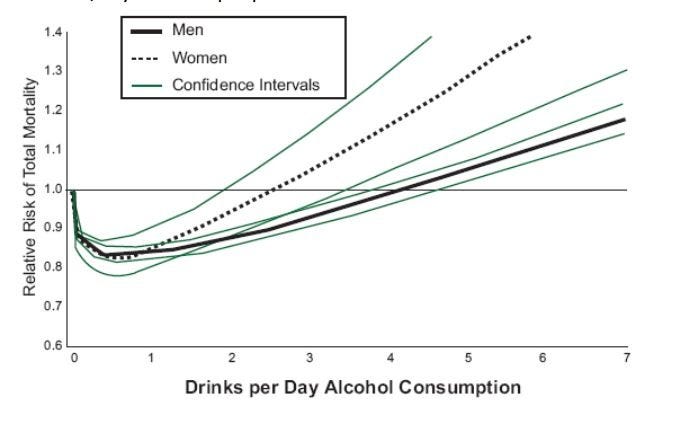
TC is a 70-year-old man hospitalized after a fall with a hip fracture. TC is in good health, taking only two medications: an ARB for hypertension and tamsulosin for lower urinary tract symptoms due to BPH. He has a drink every day when he meets a few former colleagues at The Cove. His primary care doctor has suggested that he cut back on his drinking.
On a Monday, he does not show up for his daily libation, and his friends become worried. They can't reach him by phone, so they go to his apartment. When they knock, they hear him weakly call for help. The super lets them in, and they find him on the floor in the bathroom, where he slipped and fell 12 hours earlier. He was unable to get up, being confused and in terrible pain. He had struck his head on the fall.
Brain exercise prevents dementia
SS is a 75-year-old man who presents for an initial clinic visit. He is healthy and fit. His only medication is 10 mg of atorvastatin. On his social history, he notes that he plays bridge three nights a week. He credits this hobby with keeping his brain sharp. His new doctor, who is so skeptical of data suggesting that cognitive tasks help to prevent dementia that he has suggested we never research it again, shrugs at this comment. SS feels the need to explain his certainty.
During college, SS began playing bridge with his roommate JW. Although they stopped playing after graduation, SS and JW remained close. They both were fortunate to have successful careers, JW in medicine and SS in finance, and stable, happy families. After they retired, both around 70, they decided to take up bridge again. SS took to it immediately while JW struggled to get back into it. JW found that he no longer enjoyed the game and was frustrated at how poorly he played. He quit after about a month, while SS continued to play religiously.
Last year, when JW was diagnosed with alzheimers, SS felt like he dodged a bullet and is sure the bridge played a role.
Living near coal-fired power plants is deadly
MP is a 66-year-old woman with multiple medical problems. She is morbidly obese and has hypertension, diabetes, and chronic kidney disease. She had breast cancer in her 50’s and endometrial cancer in her early 60s. She blames her ills on mercury exposure from the coal-fired power plant that operated in her neighborhood from when she was a kid until 5 years ago.
MP has lived in the same neighborhood her whole life. Her father died when she was 10, and she grew up living with her mother and 5 siblings. Her mother worked on and off to support the family. They always received public aid. The neighborhood just seemed to get worse and worse every year. People moved away, stores closed, and violence increased. She feels things hit rock bottom in the 2010s when the public school closed due to underenrollment. While she took her doctor’s recommendations to eat better and exercise more seriously, she was scared to walk the streets, and a trip to the grocery store had become a luxury. She cannot remember a day when she wasn't anxious about her kids' safety.
It's all associated and correlated!
Unless it's not.
What a beautiful article. It points at the charm of primary care medicine in addition to illustrating the thesis nicely.
One wonders how they created the confidence intervals on the alcohol graph. I would suggest that they widen them about 10-fold and we agree that we are unlikely to have the answer at low levels of consumption, but that high levels of alcohol consumption are probably bad for you.